
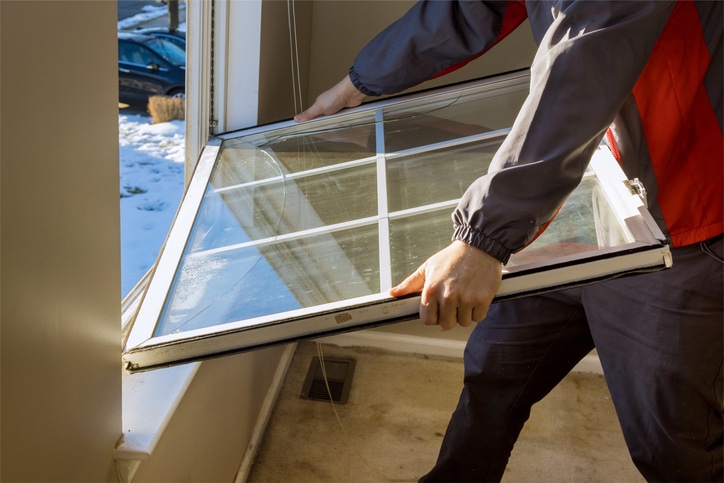
You may be surprised to learn there’s some science behind windows, since a window is just an opening in the wall where air and light come in and out. But window science goes a long way in making your windows safe, aesthetically pleasing, and energy efficient.
Fun Fact: Origin of the Word
The word “window” is a sort of corruption of “wind hole,” though others claim the words were “wind eye.” But wind holes described primitive windows precisely. They let out smoke from internal fires, and they had no glass. Instead, windows were covered with wooden shutters, animal skins, or fabric. Some wooden shutters were so well-made that some are still in use after several centuries.
By the Middle Ages, wealthy households started to use frames with oiled cloth or oiled paper. Though they weren’t transparent like glass panes, they were translucent and let in a little bit of light. As time went on, glassmaking became sophisticated enough to be used in windows. Instead of the large sheets that are seen today, these windows were set with small, diamond-shaped panes held in frames made of metal or wood. As the 18th and 19th centuries progressed, glass window panes became larger and, best of all, cheaper. Nowadays, if a window has multiple panes, it’s because of aesthetics as opposed to necessity.
The Complexity of the Double Hung Window
Opening up your double-hung window is easy for you, but the mechanism isn’t simple. The window is controlled by hidden sash weights that depend on a rope and pulley system that keeps the sashes open. If the rope and pulley system fails, you will notice that the window not only won’t stay open, but the sash you opened with a flick of the wrist is surprisingly heavy. Other parts of the familiar and popular double-hung window are the blind, inside and parting stops, the upper and lower sashes, the casing, the stool, the apron, the sill, and the window panes.
Low-E Glass
Another technological advance when it comes to windows is the low-E window. Low-E means low emissivity, and it works to greatly reduce UV and infrared light that comes through the window without affecting the level of natural light. These types of windows have a very thin, transparent coating that reflects heat. The two main types of coatings are the hard-coat and the soft-coat. The first is best for cold climates, while the second is good for all kinds of climates. It also gives better protection against the ultraviolet light that can fade rugs and furniture. Both can keep your home warm in the winter and cool in the summer, which also lowers your energy bills.
If you live in Danvers, MA or a surrounding area and need window services, make your first call to JP Carroll.